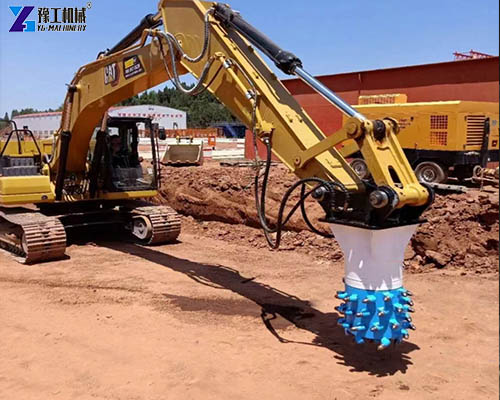
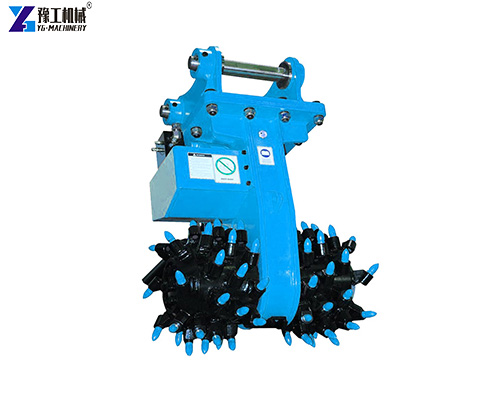
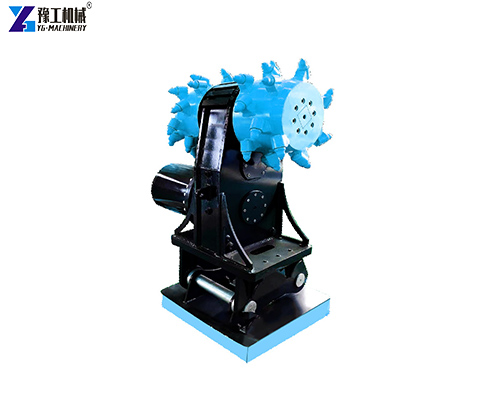
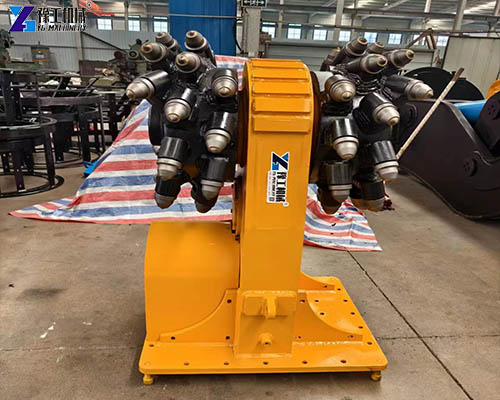
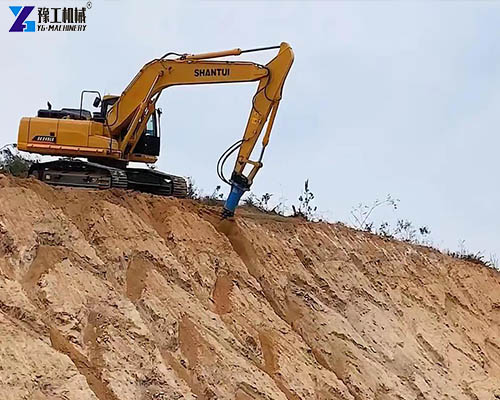
Drum cutter attachment (also called a hydraulic drum cutter) mounts on your excavator arm. It has a rotating drum with many carbide cutting teeth that chip away at rock, concrete, or asphalt. You can mill flat surfaces, cut slots, or shape tunnel profiles. Unlike a breaker that smashes, a drum cutter grinds and mills. It gives you much more control and a smoother finish.
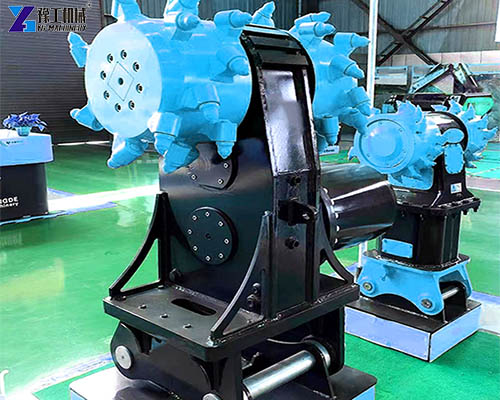
The YG drum cutter comes in two types: horizontal and vertical. Most drum cutters on excavators are horizontal (the drum spins parallel to the ground). Both types can be mounted on various excavators.
YG Drum Cutter Attachment for Excavator – Complete Specs Table
Focus on two things: your excavator weight and the material you cut.
| Model | YG140 | YG160 | YG180 | YG240 |
| H | 650mm | 820mm | 830mm | 1395mm |
| W | 410mm | 650mm | 780mm | 960mm |
| D | 390mm | 460mm | 480mm | 620mm |
| Excavator weight | 5~10T | 10~15T | 15~21T | 20~24T |
| Max power | 22Kw | 45Kw | 55Kw | 65Kw |
| Speed | 0~120r/min | 0~100r/min | 0~80r/min | 0~90r/min |
| Flow | 40L/min | 100~110L/min | 130~180r/min | 200~250r/min |
| Max Torque | 3200N.m | 5400N.m | 5600N.m | 12800N.m |
Receive Detailed Parameter List
How to Choose the Right Hydraulic Drum Cutter?
Step 1 – Know your excavator weight. Look at the “excavator weight” column. Pick a model where your machine’s weight falls inside the range. For example:
A 6-ton excavator → YG140 (5-10 tons)
A 12-ton excavator → YG160 (10-15 tons)
A 18-ton excavator → YG180 (15-21 tons)
A 22-ton excavator → YG240 (20-24 tons)
Step 2 – Consider your material. Harder rock needs more torque. For hard rock, choose YG240 (12,800 N.m). For asphalt or soft rock, lower torque models like YG140 or YG160 will work fine.
Step 3 – Check your hydraulic flow. Your excavator must supply enough oil flow (L/min). Compare the “flow” column to your excavator’s specs.
Step 4 – Match the size. The attachment’s dimensions affect reach and balance. Do not put a large cutter on a small machine – your excavator may tip forward.
Get Professional Selection Advice
Where Can You Use a Drum Cutter Attachment?
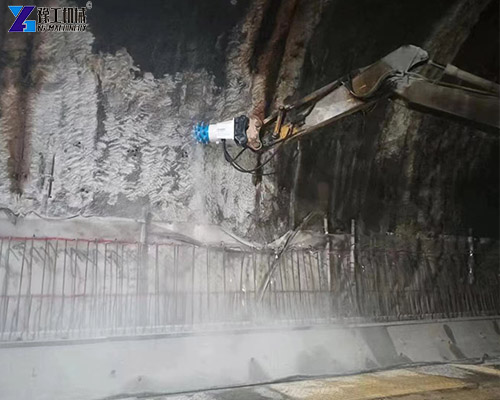
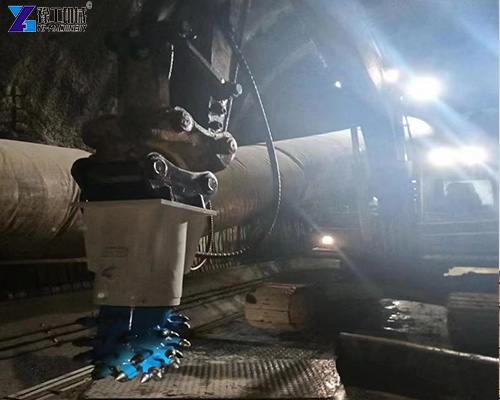
- Tunnel construction – Shape tunnel walls, cut benches, and smooth surfaces.
- Channel and trench work – Cutting channels and trenches in hard ground.
- Building demolition – Grind away concrete and rebar quietly and precisely.
- Road milling – Removing asphalt or concrete pavement – YG’s US client drum cutter attachment case
- Mixing sand and gravel – Blend materials for construction.
- Open pit coal mining – Cutting coal or overburden.
- Frozen ground cutting – Working in cold regions where the ground is frozen solid.
- Tree root milling – Grinding out roots without digging huge holes.
- Steel industry and forestry – Various cutting and milling tasks.
If you work in any of these jobs, a drum cutter attachment will save you time and give you a better finish than a breaker.
Share Your Site Conditions With Us
How Does a Drum Cutter Attachment for Excavator Work?
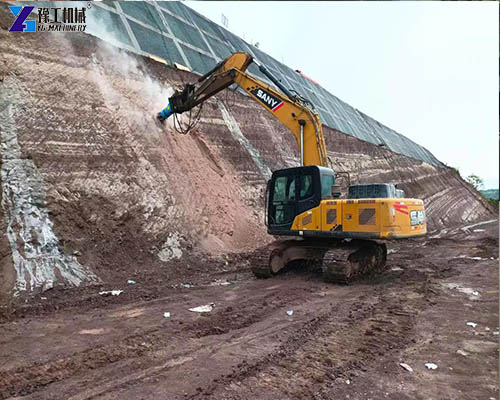
Step 1 – Spin the drum. Hydraulic oil from your excavator flows into the attachment’s motor. The motor spins the drum at high speed (up to 120 rpm depending on the model).
Step 2 – Cut and grind. The carbide teeth on the drum chip away at the material. The drum grinds and mills instead of smashing. You get a smooth, controlled cut.
Step 3 – Move and repeat. The operator controls the excavator arm to guide the cutter along the desired path. The drum cuts as you move.
The process is continuous. You can mill flat surfaces, cut slots, or shape profiles.
Drum Cutter vs Breaker – Why Choose a Drum Cutter?
| Feature | Drum Cutter | Breaker |
| Action | Grinds and mills | Smashes with impact |
| Cut quality | Smooth, precise | Rough, uneven |
| Vibration | Low | High – shakes machine and ground |
| Noise | Quieter | Very loud |
| Control | High – you guide the cut | Low – impact goes where it hits |
| Best for | Precision work, profiling, sensitive areas | Breaking large masses, primary demolition |
Find The Right Solution For Your Job
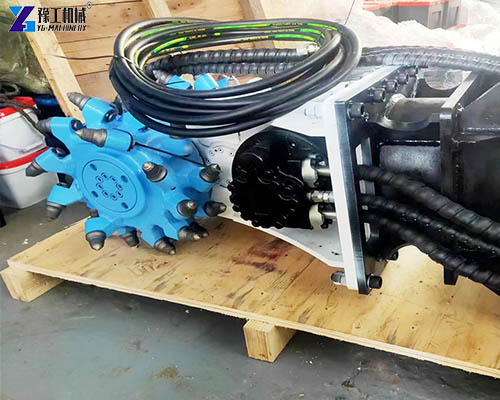
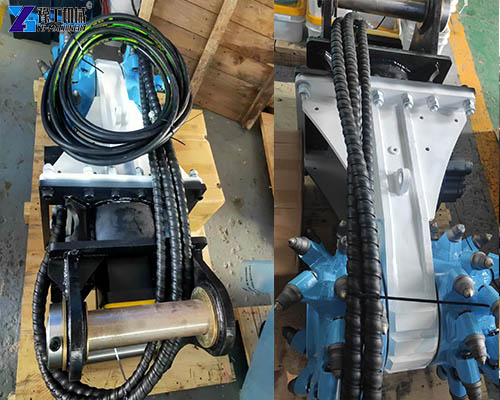
Core Components of a Drum Cutter Attachment
A hydraulic drum cutter has these main parts:
- Drum – The rotating cylinder with carbide teeth.
- Teeth (cutting picks) – Carbide-tipped cutting tools that do the actual cutting. Replaceable when worn.
- Hydraulic motor – Spins the drum.
- Mounting bracket – Connects to your excavator arm.
- Hose kit – High-pressure hoses for hydraulic oil.
Frequently Asked Questions – What Buyers Really Ask
Yes. The YG140 fits 5-10 ton excavators. It is perfect for small machines working in tight spaces.
It depends on the material. Cutting soft asphalt wears teeth slowly. Cutting hard granite wears them faster. You can buy replacement teeth from YG
Horizontal type spins the drum parallel to the ground – good for milling flat surfaces and trenches. Vertical type spins perpendicular – good for cutting vertical walls or slots. Ask YG which type works best for your application.
Get Your Project‑Specific Quote
Is a YG Hydraulic Drum Cutter Right for You?
If you need precision cutting instead of smashing, a drum cutter attachment is the right tool. YG offers four models for excavators from 5 to 24 tons. The YG140 is for small machines (5-10 tons, 3,200 N.m torque). The YG240 is for larger machines (20-24 tons, 12,800 N.m torque). Each model has clear specs – torque, power, flow, and dimensions. You can match the cutter to your excavator and your material.
These attachments work in tunnels, on roads, in mines, on construction sites, and even for forestry. They cut rock, concrete, asphalt, frozen ground, and tree roots. The investment pays for itself in faster work and less rework.