Many overseas demolition contractors and quarry operators struggle to pick the right hydraulic diamond wire saw. The wrong model causes slow cutting speed, frequent wire breakage, and expensive downtime. This buying guide covers all key selection factors, working condition matching, and model recommendations.
Before you pick any hydraulic wire saw, check your site and cutting conditions first. This saves you from costly mistakes.
① Material to cut – Is it reinforced concrete, granite, marble, or steel-reinforced structures? Different materials need different diamond bead specifications and cutting speeds. For granite and hard rock, higher power (> 37 kW) is recommended.
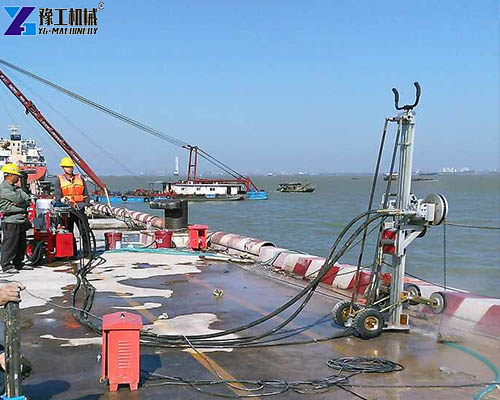
② Cutting depth and geometry – Do you need deep cuts (over 10m), curved cuts, or underwater cutting? The hydraulic diamond wire saw’s cutting depth is limited only by the wire length, making it ideal for thick structures like bridge piers.
③ Power source available – Do you have 220V or 380V power on site? The machine requires 220V/380V, 50Hz. Remote sites may need generator support.
④ Working environment – Urban demolition with strict noise and vibration regulations? Underwater pile cutting? Tunnel work? This decides which configuration you need.
⑤ Special local conditions – High temperatures, limited water supply, or confined spaces? Tell your supplier.
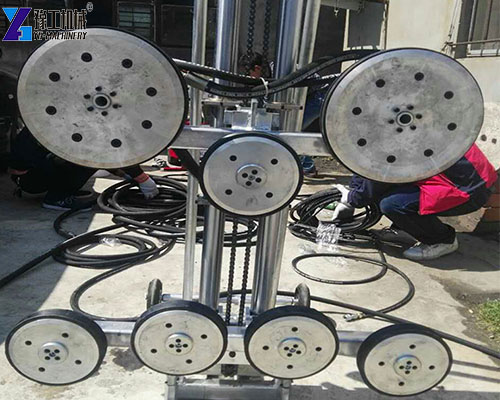
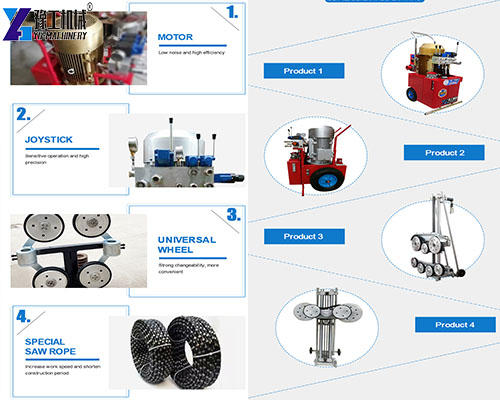
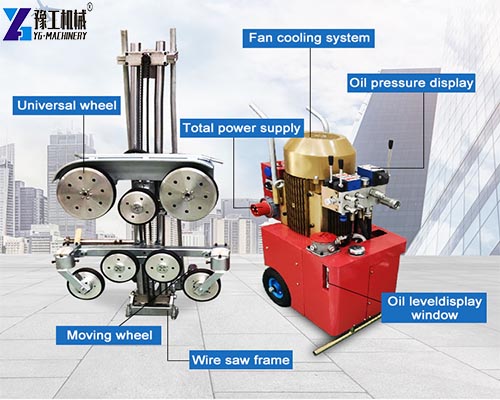
The concrete rope saw uses a flexible steel cable embedded with industrial-grade diamond beads. Unlike traditional saws that rely on abrasive discs or blades, it employs a continuous loop of steel cable coated with diamond particles. The hydraulic system drives the wire at high speeds, generating the necessary force to cut through materials. As the diamond-studded wire rotates, the beads press into the material’s surface and gradually grind it away through abrasive machining.
Key advantages of this cutting method:
Unlimited cutting depth – Limited only by wire length, easily handling bridge piers meters thick
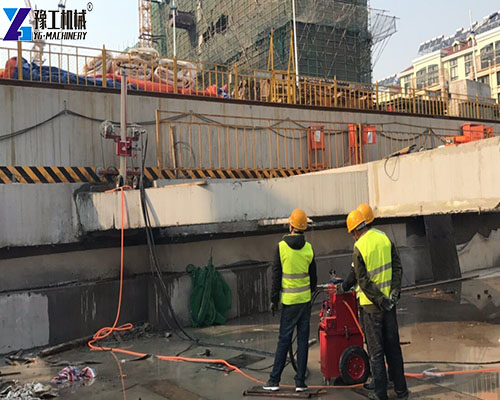
1. European Bridge Demolition – Reinforced Concrete Piers
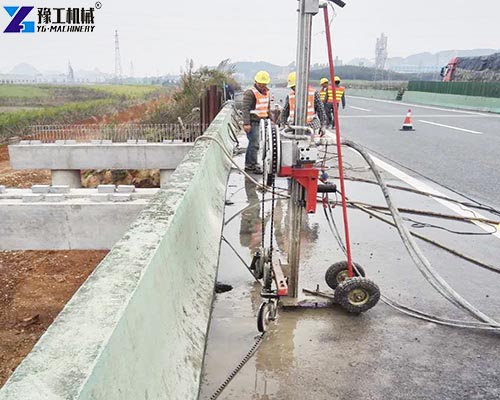
Scene: Demolishing aged bridge piers in urban areas. Heavy reinforced concrete, strict noise and vibration limits.
Pain point of old solution: Breaker hammers create unacceptable vibration that damages nearby structures. Blasting is prohibited in city centers.
Recommended model & benefits: Hydraulic diamond wire saw with 25kW pump station, 1300 r/min output speed, 20m maximum wire length. Near-zero vibration protects adjacent buildings. Low noise meets EU regulations. Unlimited cutting depth handles thick piers.
2. Middle East Quarry – Granite and Marble Block Cutting
Scene: Extracting dimensional stone blocks from quarries. High temperatures, hard material.
Pain point of old solution: Blasting damages stone quality. Traditional saws are slow on hard granite.
Recommended model & benefits: Hydraulic wire saw with 25kW motor power and high-output shaft speed. Cuts granite precisely with minimal waste. Higher stone recovery rate. Works in high-temperature conditions.
3. Southeast Asian Underwater Pile Cutting
Scene: Removing underwater concrete piles for port renovation. Saltwater environment, limited visibility.
Pain point of old solution: Divers with cutting torches are dangerous and slow. Traditional saws can’t operate underwater.
Recommended model & benefits: Hydraulic diamond wire saw with sealed design and abrasive-resistant beads. Stable operation underwater without water leakage. Remote control keeps operators safe.
4. North American Nuclear Power Plant Modification
Scene: Structural modifications in nuclear facilities. Extreme safety requirements, no vibration allowed.
Pain point of old solution: Any vibration risks sensitive equipment. Traditional demolition methods are prohibited.
Recommended model & benefits: Hydraulic concrete rope saw with static cutting technology. Zero vibration operation. Precision cutting with smooth surfaces. Remote control for operator safety.
Common Buying Mistakes Overseas Buyers Always Make
Mistake 1: Choosing the wrong motor power for material hardness
Low power (22kW) struggles with hard granite and heavily reinforced concrete. High power (25kW+) is needed for hard materials. Correct approach: Tell your supplier your material type. For granite and hard rock, choose 25kW or higher.
Mistake 2: Ignore hydraulic flow matching
The hydraulic wire saw requires 40-100 L/min main drive motor flow. Too low = no cutting power. Too serious internal damage. Correct approach: Send your hydraulic power unit specs to the supplier for verification.
Mistake 3: Choose the wrong wire length for cutting depth
Maximum wire length is 20m. If your structure is thicker than 20m, you need a different configuration. Correct approach: Measure your maximum cutting depth before ordering.
Mistake 4: Forget CE certification and customs documents
Many hydraulic diamond wire saw shipments get stuck at customs. Local sites refuse machines without proper certification. Correct approach: Confirm all export documents before payment: CE, ISO, material test report, certificate of origin.
Mistake 5: Neglect diamond wire replacement
Diamond-impregnated beads wear out from cutting. In overseas markets, replacement wire takes weeks. Correct approach: Order spare diamond wire with your initial purchase. High-density diamond beads reduce replacement frequency by 50%.
Mistake 6: Ignore voltage requirements
The hydraulic pump requires 220V/380V, 50Hz. Some countries use different voltage or frequency. Correct approach: Confirm your local power specifications before ordering.
Mistake 7: Forget about water cooling
Wire cutting generates heat. Most systems require water cooling. Some sites have limited water supply. Correct approach: Check if air-cooled options are available for water-scarce sites.
Tell us: material to cut (concrete, granite, marble, or reinforced structure), required cutting depth, power source available (voltage and hydraulic flow), working country, and site conditions. Our engineer will recommend the most suitable hydraulic diamond wire saw model for you.