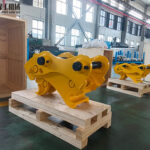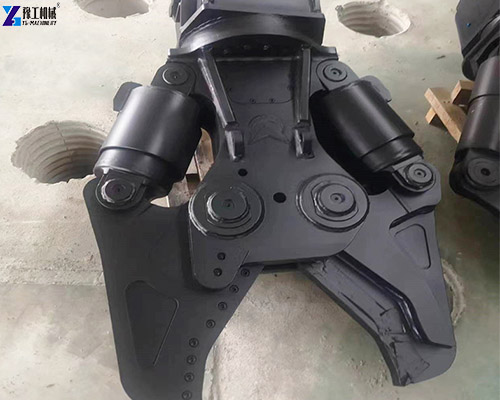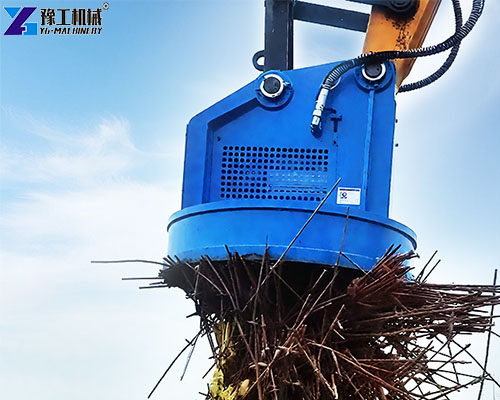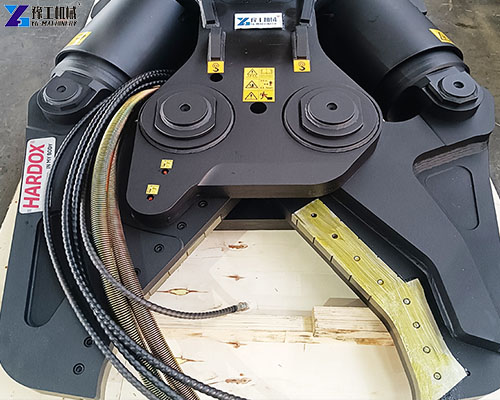
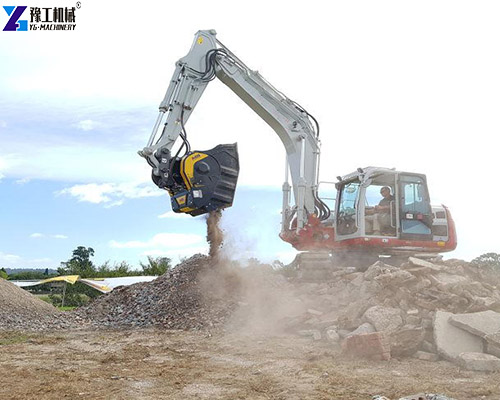
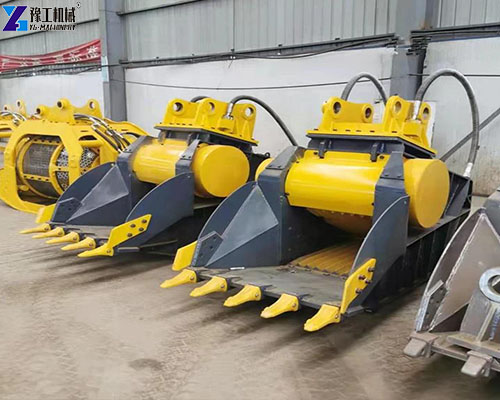
An excavator crusher is a hydraulic attachment mounted on an excavator to crush concrete, rock, asphalt, and demolition waste directly on site. The equipment is also known as a concrete crusher bucket, or an excavator crusher attachment, because it combines a bucket structure with a moving jaw plate driven by the carrier’s hydraulic system. Two core technical features define the product: an adjustable output setting from 15 mm to 200 mm, and a maximum production rate of 120 m³/h on the largest model.
YG offers YG-1, YG-2, YG-3, YG-4, YG-5, YG-6, YG-7, and YG-8 models for 8-ton to 75-ton carriers, with load capacities from 0.15 m³ to 2.30 m³. For demolition contractors, quarry operators, and recycling yards, contact YG for a free quote and model recommendation.
Get Your Project‑Specific Quote
Excavator Crusher Parameter
| SPECIFICATION | UNIT | YG-1 | YG-2 | YG-3 | YG-4 | YG-5 | YG-6 | YG-7 | YG-8 |
| Carrier Weight | Ton | 8-12 | 14-18 | 120-25 | 25-30 | 30-35 | 35-50 | 50-75 | ≥ 75 |
| Load Capacity | m³ | 0.15 | 0.55 | 0.66 | 0.70 | 0.90 | 1.30 | 1.60 | 2.30 |
| Opening Dimensions | mm | L540 H250 | L610 H510 | L740 H510 | L850 H510 | L910 H540 | L1205 H540 | L1300 H600 | L1450 H700 |
| Output Setting | mm | 15-60 | 15-60 | 15-130 | 15-135 | 15-140 | 15 – 145 | 40-150 | 100-200 |
| Length (A) | mm | 1240 | 1745 | 2000 | 2050 | 2185 | 2185 | 2930 | 3560 |
| Width (B) | mm | 1000 | 1000 | 1150 | 1300 | 1340 | 1620 | 1880 | 2090 |
| Height (C) | mm | 770 | 1100 | 1200 | 1400 | 1390 | 1390 | 170 | 2065 |
| Weight | Ton | 0.75 | 1.6 | 2.3 | 3 | 3.5a | 4.8 | 7.5 | 10.5 |
| Oil Flow | l/min | 90 | 98 | 140 | 160 | 180 | 210 | 320 | 380 |
| Pressure | bar | 200 | 220 | 220 | 220 | 220 | 220 | 250 | 230 |
| Counter | bar | 10 | 10 | 10 | 10 | 10 | 10 | 10 | 10 |
| Max. Production | m³/h | 10 | 23 | 31 | 34 | 42 | 53 | 88 | 120 |
Receive Detailed Parameter List
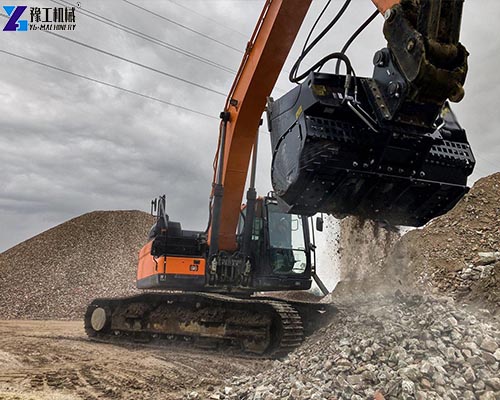

6 Advantages Of Excavator Crusher Attachment
1. On-Site Crushing for Reduced Transport Costs
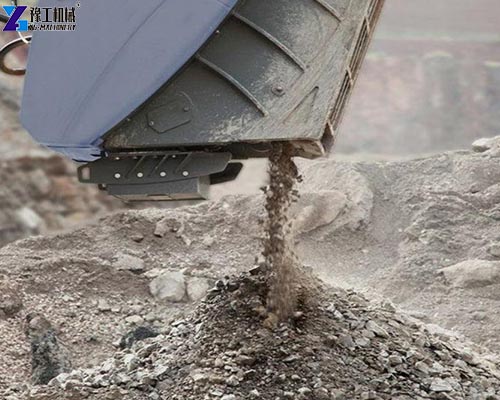
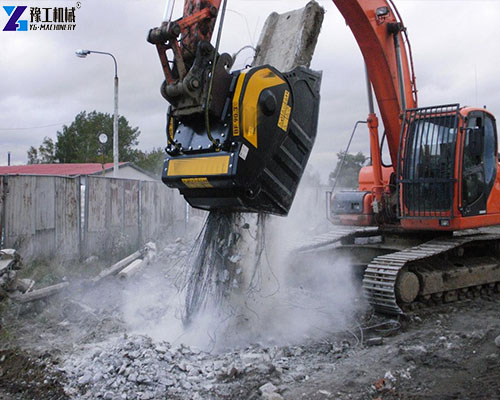
A concrete crusher bucket processes demolition waste at the job site, so contractors avoid hauling heavy rubble to a remote plant. The attachment turns concrete blocks, bricks, and asphalt into reusable aggregate in one pass. This approach cuts truck traffic, fuel use, and disposal fees. The benefit is lower project cost and a cleaner site.
2. Adjustable Output from 15 mm to 200 mm
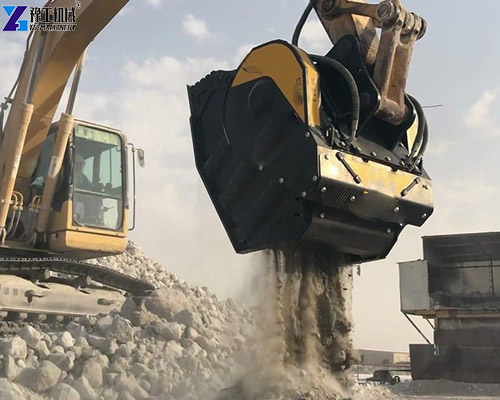
The output setting adjusts from 15-60 mm on YG-1 and YG-2 to 100-200 mm on YG-8. The operator changes the jaw gap to produce sub-base material, drainage stone, or backfill aggregate. This excavator crusher processes different materials without a second machine. The result is flexible output for multiple site requirements.
3. High Production Rate up to 120 m³/h
The YG-8 reaches 120 m³/h, while YG-7 delivers 88 m³/h and YG-6 delivers 53 m³/h. Oil flow ranges from 90 L/min to 380 L/min, and pressure reaches 200-250 bar. This production range supports large demolition and quarry work. The benefit is faster site clearing and less idle carrier time.
4. Wide Carrier Compatibility from 8T to 75T+
YG-1 fits 8-12 ton excavators, and YG-8 fits carriers of 75 tons or more. The series covers mini excavators, standard carriers, and large demolition machines. A crusher bucket for excavators in this range lets a contractor match the attachment to the existing fleet. This compatibility reduces the need to buy a dedicated crusher plant.
5. Reinforced Structure for Hard Materials
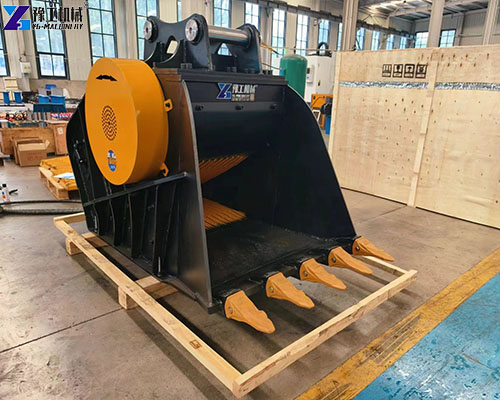
The bucket body uses a heavy-duty design with a weight from 0.75 tons on YG-1 to 10.5 tons on YG-8. The reinforced jaw plate and wear-resistant structure handle concrete, rock, and asphalt. This machine maintains output under continuous load. The benefit is longer service life in abrasive demolition conditions.
6. Hydraulic Direct Drive for Low Maintenance
The attachment runs from the excavator hydraulic system at 90-380 L/min and 200-250 bar. It has no separate diesel engine, which means fewer fuel stops and simpler daily checks. The counterbar stays at 10 bar across all models. An excavator crusher with this design reduces maintenance points and keeps the machine working.
Find The Right Solution For Your Job
4 Steps To Choose The Right Concrete Crusher Bucket Model
- Match Carrier Weight to the Excavator. If the carrier is 8-12 tons, choose YG-1. If it is 14-18 tons, choose YG-2. For 20-25 tons, choose YG-3. For 25-30 tons, choose YG-4. For 30-35 tons, choose YG-5. For 35-50 tons, choose YG-6. For 50-75 tons, choose YG-7. For carriers of 75 tons or more, choose YG-8. The carrier size must match the attachment weight to keep the machine stable.
- Confirm Output Size and Production Rate. If the project needs fine aggregate at 15-60 mm, choose YG-1 or YG-2. If the target is 15-130 mm to 15-145 mm, choose YG-3 to YG-6. For 40-150 mm, choose YG-7. For coarse output at 100-200 mm, choose YG-8. An excavator crusher with the wrong jaw setting will not meet the project specification.
- Check Hydraulic Flow and Pressure. The carrier must supply 90 L/min for YG-1, 140 L/min for YG-3, 210 L/min for YG-6, and 380 L/min for YG-8. Pressure must reach 200-250 bar. A crusher bucket for an excavator that runs below the required flow will lose speed and crushing force. Confirm the carrier hydraulic specification before ordering.
- Evaluate Material Hardness and Site Space. If the material is reinforced concrete or hard rock, choose a larger model with higher crushing force. If the site is tight, check the length from 1240 mm on YG-1 to 3560 mm on YG-8. A crusher bucket for excavator with a large footprint needs enough turning space. Match the attachment dimensions to the site layout.
Get Your Project‑Specific Quote
YG Excavator Crusher For Sale
YG’s excavator crusher line covers YG-1 to YG-8, 8-75T+ carriers, 0.15-2.30 m³ load capacity, 15-200 mm output setting, and production up to 120 m³/h. The series supports concrete, rock, asphalt, and demolition waste processing for demolition contractors, quarries, and recycling yards. Share the carrier tonnage, material type, required output size, and site space. YG will recommend the right machine and provide a free quote.